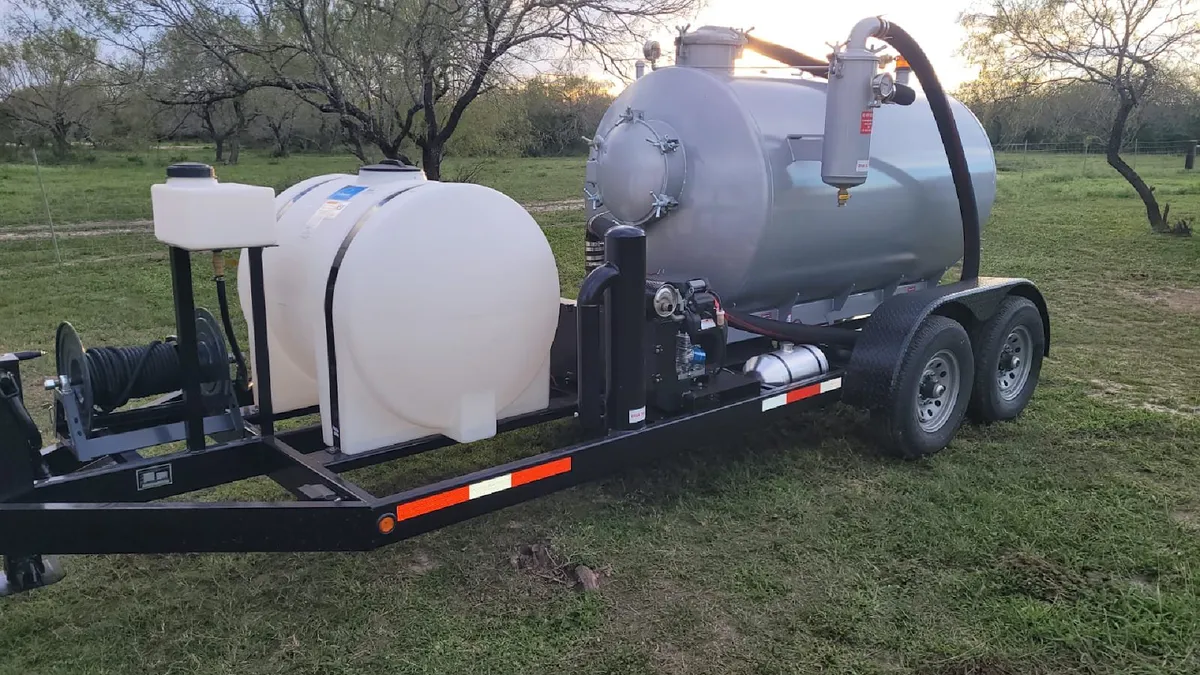
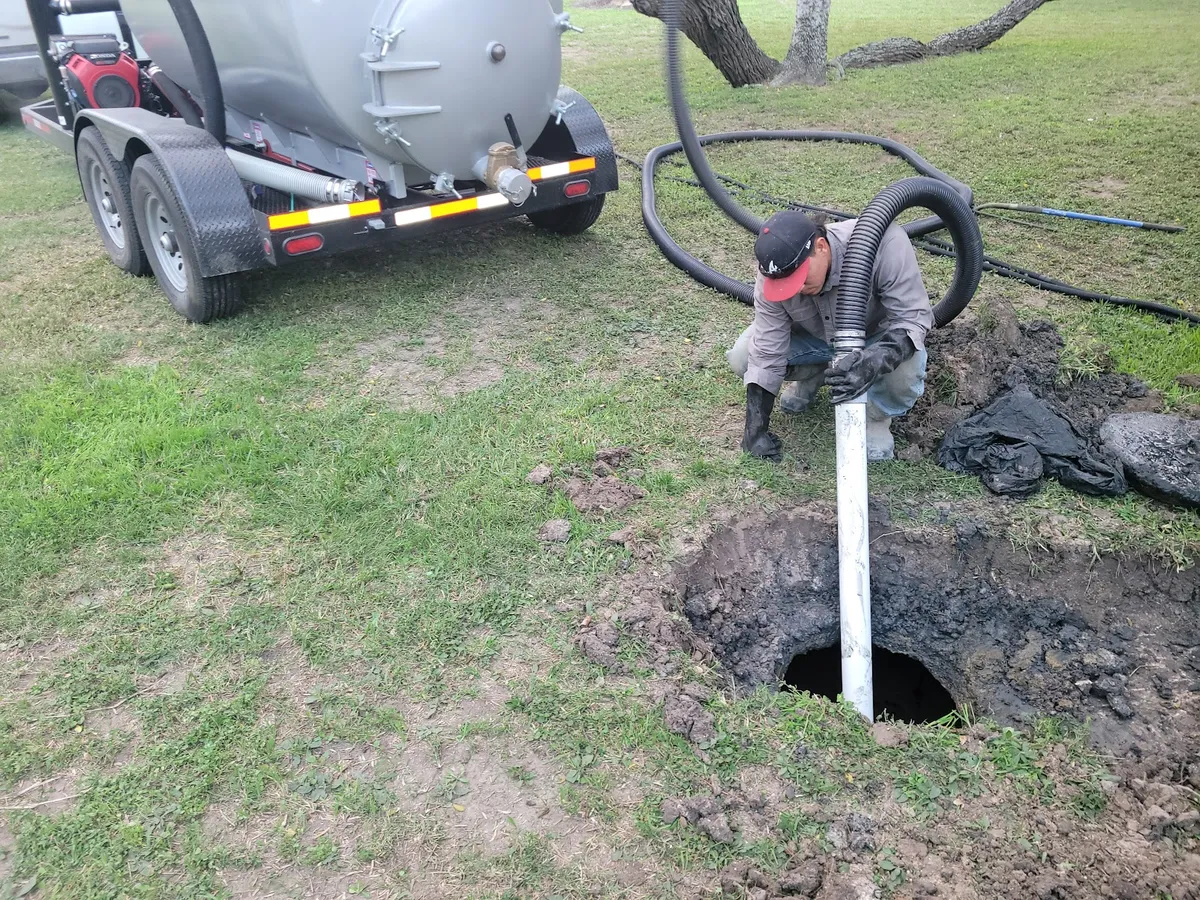

For a conventional septic system, the Texas Commission on Environmental Quality (TCEQ) recommends pumping every three to five years, and the U.S. EPA says the same. Busy households, garbage disposals and smaller tanks push you toward the short end, and plenty of families land closer to every two or three years.
Why pumping matters at all
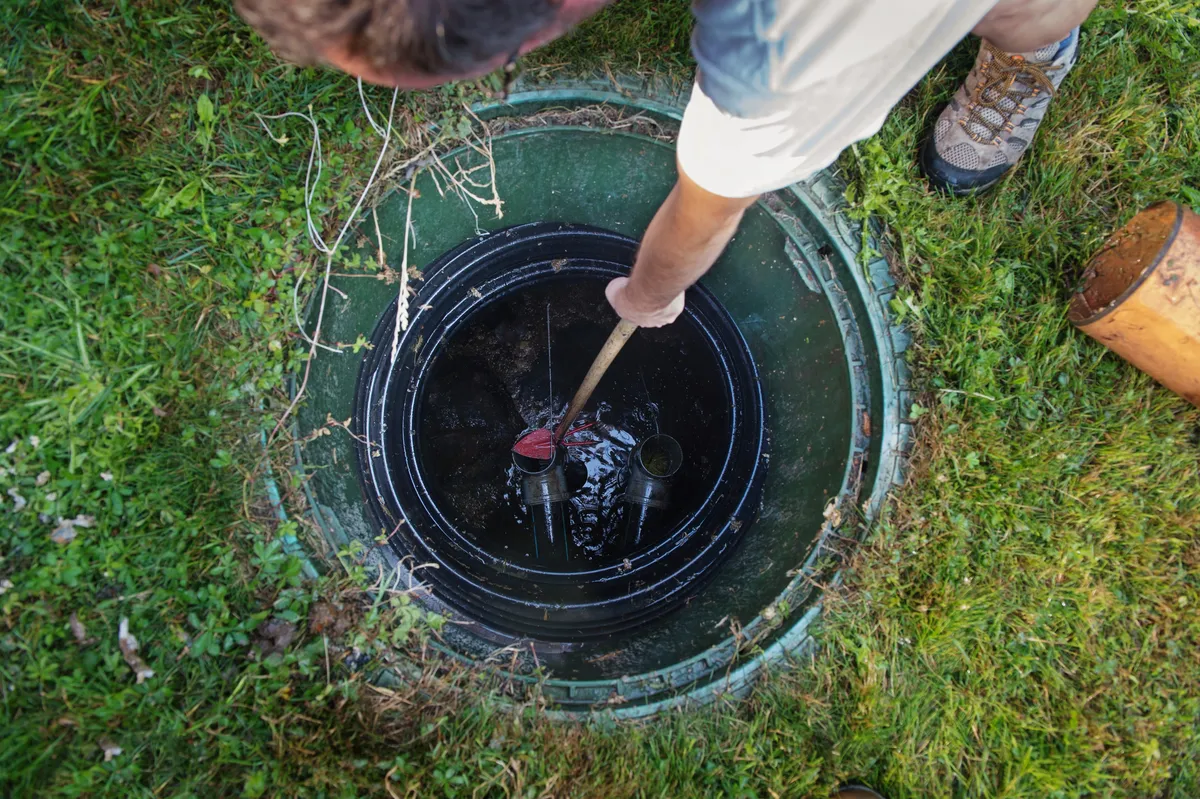
Everything that goes down your drains ends up in the tank. Heavy solids settle to the bottom as sludge, grease and light material float to the top as scum, and the liquid in between flows out to the drain field. Pumping removes the sludge and scum before they build up far enough to slip out with that liquid.
TCEQ's reason for the three-to-five-year schedule is to prevent “short circuiting of the treatment process.” Solids that reach the drain field clog the soil, and the drain field is the expensive part of the system to fix. A routine pump-out costs far less than drain field work.
What decides your schedule
The EPA lists four things that set how often a tank needs pumping:
- Household size. More people means more solids. A family of six fills a tank much faster than a couple.
- Total wastewater. Long showers, back-to-back laundry and leaky toilets push more water through the tank, which gives solids less time to settle.
- Solids in the wastewater. A garbage disposal is the big one. In the EPA's words, if you use one, “your tank will need to be pumped more frequently.”
- Tank size. A bigger tank holds more sludge before it's due. If you don't know the size of yours, ask whoever pumps it next.
How a pro decides it's time
Instead of going by the calendar alone, a septic professional looks at the two layers in your tank. The EPA's rule is to pump when any one of these is true:
- the bottom of the scum layer is within 6 inches of the outlet,
- the top of the sludge layer is within 12 inches of the outlet, or
- sludge and scum together take up more than 25 percent of the liquid depth.
That's why the best time to plan your next pump-out is right after this one. When we pump your tank, we'll tell you where it actually sits, so the next date isn't a guess.
Signs you're already overdue
If you notice any of these, don't wait for the calendar:
- Drains and toilets that are slow all over the house, not just at one fixture
- Gurgling sounds in the plumbing
- A sewage smell in the yard or near the tank
- Soggy ground or standing water over the drain field
- A strip of grass over the tank or drain field that's greener than the rest of the yard
- Wastewater coming back up into a tub, shower or floor drain
A backup can't wait. We answer around the clock and weekends cost the same as weekdays, so call (361) 800-3929 or see our 24-hour emergency septic service.
Aerobic systems run on a different schedule
Some systems, especially newer ones, are aerobic units with an air pump, an alarm and spray heads. The EPA says systems with pumps or mechanical parts “should be inspected more often, generally once a year.” In Texas, a new aerobic system starts out under a maintenance contract, and TCEQ notes that after two years some homeowners can take over the maintenance themselves, depending on local rules.
Those maintenance visits check the equipment. When the solids build up, an aerobic tank still needs a pump-out like any other.
Hire a registered sludge transporter
In Texas, companies that haul septic waste register with TCEQ as sludge transporters, and TCEQ points homeowners to its online list of registered transporters when choosing one. Gringo Pumping holds two active TCEQ sludge transporter registrations (26425 and 27073). Owner Tony Bowlin also holds three TCEQ septic licenses of his own: Installer II, Site Evaluator and Designated Representative.
Selling or buying a house?
A septic inspection is often part of a home sale, and VA loans can call for one. If you're buying, ask when the tank was last pumped. If nobody knows, assume it's due. More on that here: real estate and VA loan septic inspections.
The bottom line
Plan on every three to five years, closer to two or three with a full house or a garbage disposal, and let the person pumping your tank tell you where it actually stands. If you can't remember the last time it was pumped, it's probably time. Book a septic tank pumping or call (361) 800-3929, 24 hours a day.
 Related services